The relationship between religion, conspiracy thinking and institutional trust represents a complex and often overlooked dimension of contemporary debates on misinformation and social polarisation. Religious communities can provide important spaces for belonging, solidarity and shared values, yet certain organisational dynamics, particularly when characterised by limited transparency, rigid hierarchies or resistance to critical questioning, may also create conditions in which distrust and conspiratorial interpretations can emerge.
How can conspiracy thinking develop within religious organisations? What role do historical transformations, institutional power structures and educational practices play in shaping these dynamics? And how can religious communities promote critical thinking, transparency and dialogue while respecting individual faith and freedom of belief?
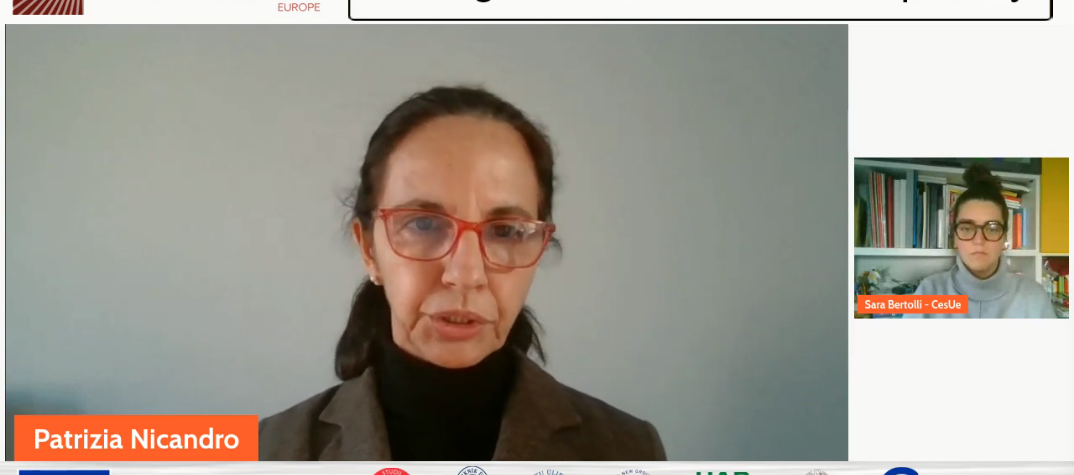
These questions are explored in an interview with Patrizia Nicandro, psychopedagogist and PhD in Anthropology and Epistemology of Complexity, whose research focuses on the Italian Pentecostal movement, conducted by Sara Bertolli, journalist at Focus Europe Italia, within the framework of the European project CONSPIRE – CONSPIracism and RAdicalisation Risks in Europe.
Funded by the Erasmus+ programme and coordinated by the University of Turin, CONSPIRE brings together European universities and CESUE/Focus Europe to investigate conspiracy theories and radicalisation risks while developing innovative educational approaches to strengthen critical thinking, media literacy and democratic participation. Running from 2024 to 2027, the project combines academic research, non-formal education, participatory workshops and community engagement. This interview is part of the Conspiracy Pills, a series of contributions from academics and professionals designed to encourage students and wider audiences to examine the social, cultural and institutional mechanisms associated with conspiratorial thinking.
Drawing on her interdisciplinary research, Nicandro explores the historical development of Pentecostalism in Italy, from its origins among Italian migrant communities in the United States to its gradual institutionalisation during the twentieth century. She examines how the movement evolved from relatively autonomous congregations into more centralised religious structures, highlighting the importance of historical research in understanding relationships between religious leadership, institutional authority and wider political contexts.
Importantly, Nicandro emphasises that there is no direct or automatic connection between evangelical faith and conspiracy thinking. Rather, her analysis focuses on the specific historical and organisational circumstances that may encourage misunderstandings, secrecy or distrust when institutional developments are not examined openly and critically.
A central theme of the conversation is the educational challenge of understanding religious organisations as complex systems. Drawing on the epistemological approach of Edgar Morin, Nicandro argues that religious communities cannot be adequately understood through theological perspectives alone. Their historical, psychological, social, legal, economic and organisational dimensions must also be considered. Fragmented knowledge and overly simplified interpretations, she suggests, can reinforce rigid identities, sectarian dynamics and resistance to critical reflection.
The interview also addresses the importance of religious education and leadership training. According to Nicandro, educational approaches that prioritise unquestioned authority or devotional conformity while neglecting historical analysis and interdisciplinary knowledge may limit opportunities for dialogue. By contrast, well-rounded education, intellectual openness and the ability to question institutional practices can contribute to healthier, more inclusive religious communities.
Particular attention is devoted to transparency, accountability and safeguarding. Nicandro discusses initiatives aimed at documenting the history of Italian Pentecostalism and reflects on the importance of listening to believers and former members who report experiences of manipulation, exclusion or abuse. Her analysis highlights how the absence of independent scrutiny and safe spaces for discussion can contribute to institutional isolation and reinforce distrust.
Ultimately, the interview demonstrates that countering conspiracy thinking within religious contexts is not about challenging personal faith, but about strengthening transparency, critical education and the responsible exercise of institutional authority. Recognising complexity, encouraging dialogue and protecting freedom of conscience are essential elements of this process.
In line with the objectives of CONSPIRE, Nicandro’s reflections offer a valuable perspective on the relationship between belief, knowledge, power and democratic participation. By examining the historical and educational dimensions of religious organisations, the conversation encourages a broader understanding of how critical thinking, institutional accountability and open dialogue can help prevent polarisation and foster more resilient and inclusive communities.